Thursday, August 13, 2020

Alice Coltrane 16mm doc. 1970 (Black Journal) rare 11,035 views•Jun 15, 2020


The segment focuses on the life of Alice Coltrane and her children in the wake of the death of her husband, famed jazz magician John Coltrane. This film was shot sometime during 1970; three years after the death of John Coltrane. The 16mm color film print is a short documentary made for a segment of National Education Television's Black Journal television program. This film opens with a collage of photos of jazz musician John Coltrane with a voice-over of a male narrator communicating the musical genius and personal demeanor of the renowned music artist. The voice-over ends with an open-ended statement on John Coltrane's family; leading into an interview with his wife, Alice Coltrane. Alice Coltrane discusses the influence her late husband has had on her life, both musically and spiritually. She speaks of him being a spiritual person, although not tied to one organized religion, his vegetarian diet, and how he carved time out of his days to meditate. There is footage of their children playing in the yard and walking with their mother. Alice plays the harp and talks about how her music is a manifestation of her spirituality. She discusses her musical career and how she balances that with being a mother and paying tribute to her late husband, but also not wanting to be defined as an extension of John Coltrane's music. Instead, when she finds herself playing some of the music he wrote, she sees herself as sharing in what he produced throughout his career. Footage of her playing the piano at a small jazz concert with a few other musicians plays for two minutes. In the final minutes of the segment, Alice Coltrane explains her relationship with a higher power and the personal enlightenment she has felt and gained through meditation. The film ends with a dolly-out/zoom-out long shot of Alice Coltrane and her children waving from their home. CREDIT: Collection of the Smithsonian National Museum of African American History and Culture, Gift of Pearl Bowser

Sunday, January 27, 2019

Mixing first and third person POV

Understand the rules to break the rules

As a rule about rule-breaking, you can break any rule of writing so long as you're doing it for effect. Broken rules suddenly work when the emotional effect evoked in the reader by breaking the rules is precisely the effect you want.

Which means that to understand how we might get away with mixing first- and third-person POVs, we'd better understand how each one "breaks" the other.

I wrote an article on what POV is for last year that covers this in some depth, so I won't rehash it all here. Suffice it to say that if you compare first- and third-person styling, you find this:

The difference between these POVs is fundamentally a difference about emotional distance and information control.

Understand those two axes, and the answer to that "when it works, why?" question becomes pretty straightforward.

Emotional distance

First-person narration has the viewpoint character telling you the story directly, in their own voice. Often, the character also lets you in on their inner-most thoughts. It is a very intimate narration style, and brings readers emotionally close to the viewpoint character.

By contrast, third-person holds them at distance. In third-person narration the reader's view of the characters is mediated by an (often anonymous and disembodied) narrator. The presence of that intermediary puts one level of separation between you and the characters, which in turn tends to diminish your emotional connection to them.

Information control

Third-person narration shares information pretty freely with readers. This is particularly so when the story uses an omniscient narrator, who is free to tell you anything, at any time, about anyone or any event in the story's world. Third-person narration has a way of laying all its cards on the table, as it were.

First-person narration, however, necessarily limits the information to only what the viewpoint character knows. Since the character is telling you the story, they can't tell you anything they themselves aren't aware of. All kinds of things can be happening--and typically are--outside of the first-person narrator's view. It should be pretty easy to see how a writer can use that limitation to create mysteries and otherwise hide stuff from the reader.

Guidelines for POV mixing

With that in mind, a story could benefit from using a mixed POV style if any of the following are true:

  • You want to pull one character very close, while leaving the other as an enigma. The obvious mode for that is to let readers be very close to a first-person hero, while keeping the third-person villain more distant. Because readers have access to the first-person hero's thoughts and motivations, they should have an easy time empathizing with them. Likewise, because we'd witness the villain and their dastardly deeds without the same understanding of why they're doing that stuff, readers should have no problem in hoping the villain eventually gets caught.

  • The story's major hook involves learning the antagonist's motives and/or plans. A first/third person split between protagonist and antagonist keeps the villain mysterious: because all we can see is what they're doing, but not at all why, we become curious to learn the reasons. That's the hook.

  • You want to deeply explore the villain's motivations and plans, while keeping mysterious the way in which the good guys are going to stop them. For this, you'd switch the viewpoints, putting the bad guy in first-person while keeping the good guys at distance. This would work when you have a villain who is a "true believer" in the rightness of their cause, even if their beliefs are totally screwed-up.

As far as how to mix them, I have two suggestions: continued here: 

https://plottopunctuation.com/article-how-to-mix-first-and-third-person-pov.html


Monday, November 26, 2018

More on lighting for different shades of skin

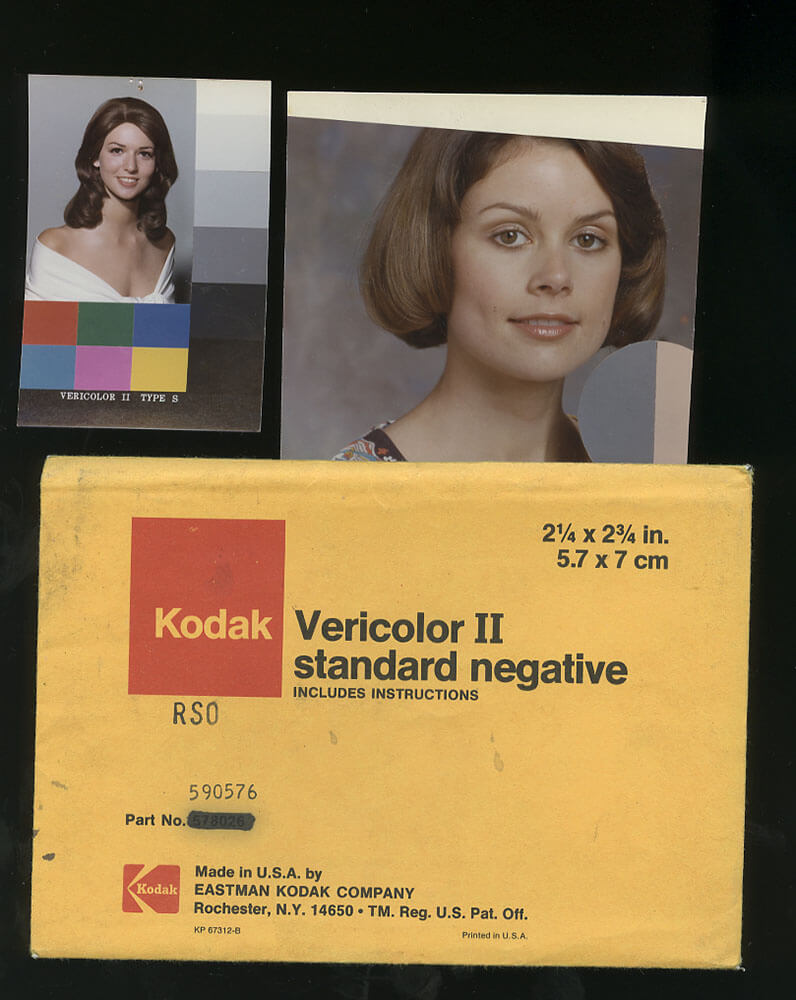
This is a good article that gives background behind how film stocks were created to make particular skin tones look realistic. 


Kodak Shirley card used to calibrate film cameras for various skin tones.

Sunday, November 25, 2018

Lighting for black people- what we can learn from Ava Duvernay!


People of a certain age (and certain hue) look back on old high school yearbook pictures with mixed feelings. Chances are, the more melanin you had, the less likely you would show up as anything more attractive than a smudge, a muddy smirk — or worse, a lurking presence — as you hovered in the back row of the chess club photo.

Part of the problem is that racism was built into film processing. Until the 1990s, professional film developers compared the skin tones in photographs against a universal guide known as “Shirley cards” which helped them figure out the right mix of chemicals to process a photo properly.
The Shirleys were always white and demure.